2026 Flooring Installation Cost Guide: Complete Pricing by Material, Room Size & City
Planning a flooring project in 2026? You're looking at $1,528 to $4,860 for a typical 500-square-foot installation, with a national average of $3,159. But here's the thing — the final price depends on three big factors: what material you choose, where you live, and how much prep your subfloor needs. This guide breaks down every cost layer — material pricing by type, city-by-city labor rates, hidden expenses most homeowners miss, and proven ways to save without cutting corners. Whether you're leaning toward hardwood, laminate, LVP, or tile, you'll walk away knowing exactly what to budget and what questions to ask contractors.
How Much Does Flooring Installation Cost in 2026?
If you're planning new floors this year, here's the number you need to know: the average homeowner spends $1,528 to $4,860 on a professional flooring installation for a 500-square-foot space. The national average sits at $3,159, or roughly $12.50 per square foot total.
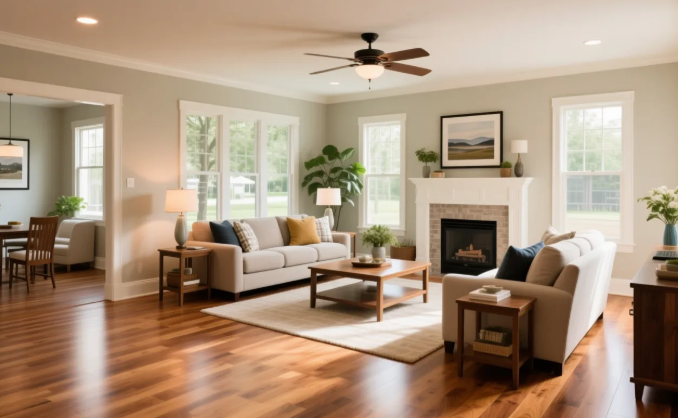
But that's just the midpoint. Your actual cost could land anywhere from $231 for a small DIY-friendly project to over $7,000 for premium materials and complex layouts. The U.S. flooring market reached $123.9 billion in 2026, growing at 5.62% CAGR — driven by 1.45 million new housing starts and over 140 million existing homes due for renovation.
What changed in 2026? Labor and freight now drive cost increases more than the materials themselves. A 1,200-square-foot project that cost $22,000 in 2023 now runs closer to $26,000–$28,000, with most of that jump coming from installation labor and shipping, not the wood or vinyl itself.
| Project Size (sq ft) | Low-End Cost | Average Cost | High-End Cost |
|---|---|---|---|
| 200 | $800 | $1,900 | $3,000 |
| 500 | $1,528 | $3,159 | $4,860 |
| 1,000 | $4,000 | $9,500 | $15,000 |
| 1,500 | $6,000 | $14,250 | $22,500 |
| 2,000 | $8,000 | $19,000 | $30,000 |
Flooring Cost by Material Type — Full Breakdown
Your material choice is the single biggest factor in your total cost. Here's how each option stacks up in 2026, from most affordable to premium.
Carpet — $2 to $8 per Square Foot Installed
Carpet remains the most budget-friendly option. Material runs $1–$5 per sq ft, with labor on the low end at $0.50–$2 per sq ft. Best suited for bedrooms, living rooms, and low-moisture areas. Higher-end wool or stain-resistant nylon can push costs toward the top of the range. Carpet padding adds $0.75–$1.75 per sq ft installed.
Laminate — $4 to $14 per Square Foot Installed
Laminate delivers a convincing wood look at a fraction of the price. Material costs $1–$6 per sq ft, installed total averaging around $7 per sq ft. The catch? Moisture is laminate's enemy — one flood or dishwasher leak can ruin it. Stick with laminate for living rooms, bedrooms, and dry areas only. Premium waterproof-core laminate now available at $4–$8+ per sq ft for materials.
Luxury Vinyl Plank (LVP) — $4 to $16 per Square Foot Installed
LVP is the fastest-growing flooring category in 2026, expanding at a 7.72% CAGR. It's 100% waterproof, softer underfoot than laminate, and realistic enough to fool most people. Material runs $2–$10 per sq ft. A standard 200 sq ft bedroom costs $1,000–$3,400 installed. LVP owners save an estimated $2,000–$4,000 over 10 years in maintenance costs compared to hardwood. Look for 20-mil wear layers as the new standard for durability.
Engineered Hardwood — $7 to $20 per Square Foot Installed
Engineered wood bridges the gap between solid hardwood and synthetic options. Material runs $2–$9 per sq ft. It offers better moisture resistance than solid wood and works well over concrete slabs or radiant heating. Rising in popularity as homeowners prioritize both aesthetics and practical performance.
Solid Hardwood — $11 to $25 per Square Foot Installed
The gold standard. Solid hardwood costs $4–$15 per sq ft for materials alone. A 1,000 sq ft job typically runs $10,000–$16,000, with high-end projects reaching $20,000–$30,000+. The upside: a 30–100 year lifespan with refinishing. The 2026 trend is shifting away from cool grays toward warm honey oaks, medium walnuts, and natural maples. For wide-plank domestic hardwood, expect total installed costs of $22–$23.50 per sq ft when factoring in today's labor and freight rates.
Ceramic & Porcelain Tile — $10 to $50 per Square Foot Installed
Tile offers unmatched durability and water resistance but comes with the highest labor costs. Material ranges from $2–$30 per sq ft, and tile labor runs $5–$22 per sq ft — the most expensive of any flooring type. A typical bathroom or kitchen project falls between $1,200 and $6,500. Outdoor tile installations add 15–20% due to weather-rated materials. Subfloor waterproofing is mandatory for wet areas, adding $2–$5 per sq ft.
| Material Type | Material Cost/Sq Ft | Total Installed/Sq Ft | Longevity | Water Resistant |
|---|---|---|---|---|
| Carpet | $1–$5 | $2–$8 | 5–15 years | No |
| Laminate | $1–$6 | $4–$14 | 10–20 years | Limited |
| LVP/LVT | $2–$10 | $4–$16 | 15–25 years | Yes (100%) |
| Engineered Wood | $2–$9 | $7–$20 | 20–40 years | Moderate |
| Solid Hardwood | $4–$15 | $11–$25 | 30–100 years | No |
| Tile | $2–$30 | $10–$50 | 20–50 years | Yes |
Labor Costs by City — Where You Live Matters
Labor accounts for 40–60% of your total flooring cost, and where you live dramatically changes that number. National average labor runs $2–$8 per sq ft or $22–$40 per hour. But city-level rates tell a very different story.
| City | Average Total Cost (500 sq ft) | Avg Hourly Rate |
|---|---|---|
| San Francisco, CA | $2,500 – $6,800 | $72 |
| Los Angeles, CA | $2,000 – $5,700 | $48 |
| Seattle, WA | $1,650 – $5,000 | $64 |
| Houston, TX | $1,700 – $5,400 | $67 |
| Chicago, IL | $1,600 – $4,400 | $65 |
| Miami, FL | $1,450 – $4,400 | $53 |
| Atlanta, GA | $1,500 – $4,400 | $56 |
| Boston, MA | $1,200 – $3,250 | $71 |
| Trenton, NJ | $1,400 – $4,000 | $53 |
| St. Paul, MN | $1,200 – $3,900 | $60 |
Notice the gap. Installing floors in San Francisco can cost more than double what you'd pay in St. Paul or Boston. The Southeast accounts for 26.41% of national flooring demand, while the Southwest leads growth at 7.12% CAGR, driven by Sun Belt migration patterns.
Labor cost also depends on installation method:
- Nail-down (solid hardwood over plywood): $3.50–$6.50 per sq ft
- Glue-down (engineered wood, LVP over concrete): $5.50–$9.50 per sq ft
- Floating/click-lock (laminate, LVP): $3.00–$5.50 per sq ft
- Stairs (tread + riser): $150–$300 per step
Peak season (spring and summer) adds a surcharge of $117–$379. Weekend or holiday installation premiums run $87–$318 extra.
Hidden Costs Most Homeowners Miss
The quoted price almost never tells the full story. Here are the expenses that catch people off guard.
Subfloor Preparation
Industry 2026 standards require subfloor variance under 1/8 inch over 10 feet. If yours doesn't meet that — and many don't — you'll need self-leveling compound at $2–$5 per sq ft. Full subfloor replacement runs $2.20–$4.75 per sq ft for materials and labor, or $1,500–$5,000 total for a 500 sq ft space.
Underlayment & Moisture Barriers
Required under most hard surface flooring. Costs $0.50–$3.50 per sq ft installed. Carpet padding adds $0.75–$1.75 per sq ft. Moisture barriers for concrete slabs are non-negotiable in basements and ground-level rooms.
Old Floor Removal & Disposal
Removing existing flooring isn't always included in the quote. Typical costs:
- Carpet removal: $0.70–$1.60 per sq ft ($140–$320 per room)
- Vinyl/glue-down LVP removal: $1.00–$2.50 per sq ft
- Hardwood removal: $2–$6 per sq ft
- Tile removal: $2–$7 per sq ft ($200–$1,400 per room)
Trim, Transitions & Finishing Touches
T-moldings between rooms cost $15–$40 per linear meter. Baseboards, quarter rounds, and threshold strips add up fast. Some contractors include these; many don't. Always ask what's covered.
Waste Factor
Installers add 5–10% extra material for cuts and mistakes. Patterned or diagonal layouts increase waste to 15%. This isn't a markup — it's practical insurance against running short mid-project.
Furniture Moving
If you don't clear the room yourself, expect $25–$75 per room for the installer to handle it.
DIY vs. Professional Installation — The Real Math
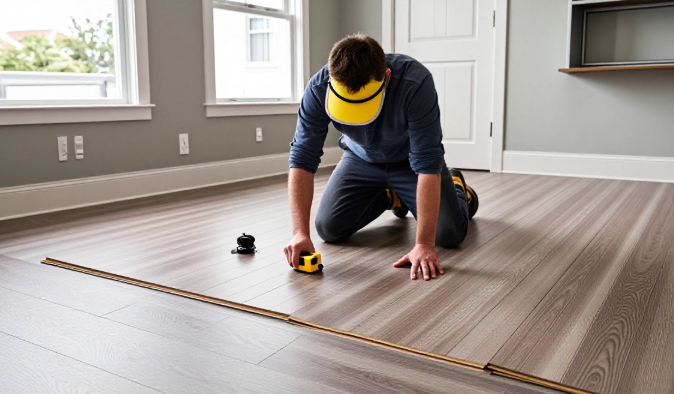
Going DIY saves you the labor portion of the bill — roughly $1,000–$4,000 on a 500 sq ft project. But it's not right for every situation.
When DIY Makes Sense
- Click-lock laminate or LVP in a simple rectangular room
- No subfloor issues (level, dry, clean)
- Small spaces under 200 sq ft
- You have experience with power tools and basic construction
When to Hire a Pro
- Solid hardwood installation (nail-down requires skill and specialized tools)
- Tile — the learning curve is steep and mistakes cost more than labor savings
- Subfloor repair, leveling, or moisture mitigation
- Stairs — one misaligned cut can ruin an expensive plank
- Warranty-sensitive products — many manufacturers require professional installation
A realistic comparison: for a 500 sq ft room, DIY laminate runs $1,500–$3,000 (materials only), while professional installation totals $2,000–$7,500. The savings can be significant, but a single mistake — like failing to acclimate the material or leaving insufficient expansion gaps — can cost more than the labor you saved.
8 Proven Ways to Save on Your 2026 Flooring Project
- Schedule in off-peak months. Late fall and winter bring lower labor rates and faster start dates. Peak season surcharges run $117–$379.
- Buy materials yourself. Contractor markups on materials can be substantial. Get a materials-only quote and compare with retail pricing.
- Bundle services. Combining removal, installation, and trim work in a single project reduces per-room mobilization fees.
- Prepare the space. Move furniture, remove wall hangings, and clear baseboards so installers spend time on floors, not logistics.
- Choose mid-tier materials. Mid-range laminate ($2.50–$4 per sq ft) or LVP mimics premium looks at half the price. The visual difference is often negligible.
- Keep layouts simple. Straight-lay installations save cutting time and reduce material waste. Herringbone and diagonal patterns add 15% waste and significant labor time.
- Get at least three itemized quotes. Compare scope, materials, labor splits, and exclusions. Vague one-line totals are a red flag.
- Ask about remnants or overstock. For smaller rooms (bathrooms, closets, laundry), leftover material from larger jobs can save 30–50%.
Conclusion: Budget Smart, Not Cheap
Here's the bottom line for 2026. A typical flooring installation costs $1,528–$4,860 for 500 square feet. Your biggest cost drivers, in order: material choice, local labor rates, and subfloor condition. The cheapest option isn't always the best value — a quality LVP or laminate installed correctly will outlast a cheap hardwood job done poorly.
Invest in proper subfloor preparation and quality underlayment. These invisible layers protect everything above them. And always verify your contractor's license and insurance before signing.
One last checklist before you hire:
- Get 3+ itemized quotes with clear material-labor splits
- Ask what's included (demo, disposal, underlayment, transitions, trim)
- Confirm warranty requirements — some products require pro installation
- Request references and check recent reviews
- Trust your gut — if a quote seems too low, something's probably missing
Use this guide as your roadmap. Know the numbers, ask the right questions, and your flooring project will deliver exactly what you paid for — without surprises.