Teeth Straightening: Options for a More Even Smile
Crooked, crowded, or uneven teeth are common concerns for adults and teens. Today, there are several ways to straighten teeth. The right option depends on your teeth, bite, treatment goals, and dental needs.
Why Do Teeth Become Crooked?
Teeth can become misaligned for different reasons, including:
- Genetics
- Jaw development
- Crowded teeth
- Missing teeth
- Teeth shifting with age
- Previous orthodontic treatment
Even if your teeth were straight in the past, they can gradually move over time.
Common Teeth Straightening Options
Clear Aligners
Clear aligners use a series of removable trays to gradually move teeth.
They are popular because they are:
- Less noticeable than traditional braces
- Removable for eating and cleaning
- Designed for gradual tooth movement
They may be suitable for certain cases of crowding, spacing, or other mild-to-moderate alignment concerns.
Traditional Braces
Traditional braces use brackets and wires to gradually move teeth into position.
They can be used for a wide range of orthodontic problems, including more complex alignment and bite issues.
Ceramic Braces
Ceramic braces work similarly to traditional braces but use tooth-colored or less noticeable brackets.
They can be an option for people who want fixed braces with a more subtle appearance.
Which Option Might Fit?
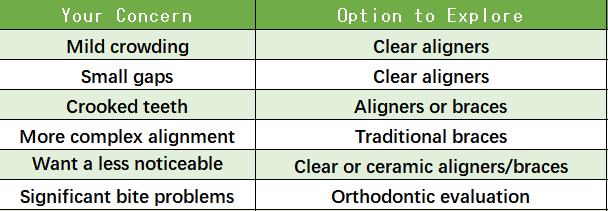
This is only a general guide. An orthodontist or dentist needs to evaluate your teeth and bite before recommending treatment.
How Long Does Teeth Straightening Take?
Treatment time varies depending on:
- How much your teeth need to move
- Your bite
- Treatment method
- How consistently treatment is followed
- Your individual response to treatment
Some mild cases may take less time, while more complex cases can require longer treatment.
What About Adults?
You don't have to be a teenager to straighten your teeth.
Many adults consider orthodontic treatment to improve:
- Crowded teeth
- Gaps
- Crooked teeth
- Bite problems
- Smile appearance
Clear aligners can be especially appealing to adults who prefer a less noticeable treatment option.
A Quick Smile Check
Ask yourself:
Are your teeth slightly crowded?
→ Clear aligners may be worth exploring.
Do you have small gaps?
→ Aligners or braces may help depending on the cause.
Are your teeth significantly crooked?
→ A professional orthodontic evaluation can help identify suitable options.
Do you have a bite problem?
→ You may need a more comprehensive orthodontic assessment.
Want something less noticeable?
→ Ask about clear aligners or ceramic braces.
What Happens After Treatment?
Teeth can shift after orthodontic treatment.
Retainers are commonly used to help maintain the new position of your teeth.
Your dental professional can recommend the appropriate type and wearing schedule.
Frequently Asked Questions
Are clear aligners as good as braces?
Clear aligners can be effective for many cases, but they are not suitable for every orthodontic problem. Treatment depends on the individual case.
How much does teeth straightening cost?
Costs vary based on the treatment method, complexity, treatment length, provider, and insurance coverage.
Can adults get braces?
Yes. Orthodontic treatment is available for adults as well as younger patients.
Are clear aligners removable?
Yes. They are designed to be removed when eating, drinking certain beverages, and cleaning your teeth.
Do teeth stay straight after treatment?
Teeth can shift over time, which is why retainers are commonly recommended after orthodontic treatment.
The Bottom Line
Crooked, crowded, or uneven teeth can often be treated with different orthodontic options.
Clear aligners, traditional braces, and ceramic braces each have different advantages.
The best choice depends on your teeth, bite, treatment goals, and professional evaluation.